Earth, Water, and Environmental Sciences (STEE) Track
Contacts
- Academic Directors:Christelle GUILHE-BATIOT and Benoit GIBERT
- Secretary: Rémi MARTIN
Course Objectives
The Earth, Water, and Environmental Sciences (STEE) track combines naturalistic and quantitative approaches to Earth and Water Sciences. Fieldwork is an integral part of the curriculum. It builds on previous bachelor’s degree programs in these fields, which have had various names over the years.
The traditional disciplines of the geosciences (petrology, sedimentology, geophysics, geochemistry, tectonics, hydrogeology, etc.) are at the core of the program. The connection between these disciplines and environmental issues is explicit (resources, risks, paleoenvironments, global change, pollution, hazards). Mastering computational, mathematical, geophysical, and geochemical tools is also a key component of our program.
In the L3 STEE program, a project- TU allows students to apply their knowledge and skills by completing an independent project supervised by faculty members and researchers from research laboratories affiliated with the TEE bachelor’s degree track.
FURTHER EDUCATION AND CAREER OPPORTUNITIES
The STEE track is a general program designed to prepare students for a master’s degree. It does not primarily prepare students for career opportunities upon completion of the L3, though it is possible to switch to a more career-oriented L3 program. The natural career paths are at the master’s level (bac+5) or doctoral level (bac+8). Master’s programs accessible after the TEE bachelor’s degree—Earth and Environmental Sciences track—include any master’s program in Earth Sciences, Water Sciences, as well as Environmental Sciences, Energy, and master’s programs with specializations in paleontology, oceanography, and more…
At the master’s level, the natural career paths are executive/engineering positions in large companies, engineering firms, and local governments involved in the fields of water resource management, pollution control, natural hazards, and mineral and petroleum resources.
PROGRAM
The Earth, Water, and Environmental Sciences track is spread over 6 semesters, each comprising “ TU ” (Units of Instruction) worth ECTS credits. One semester is equivalent to 30 ECTS credits. One ECTS credit corresponds to 9 hours of student attendance in the classroom or in the field, and, on average, an equal amount of independent study. Throughout the three-year bachelor’s program, there are numerous pathways to and from other bachelor’s programs and academic tracks (IUT, BTS, CPGE, engineering schools, etc.).
Here are the " TU " featured in this tour.
SEMESTER 3
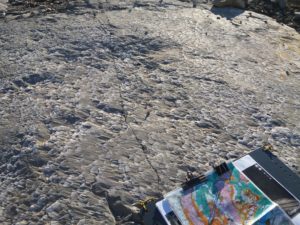
- Sedimentary Geology, Tectonics, and Mapping (4 ECTS)
- Minerals and Rocks (5 ECTS)
- Structural Geology (2 ECTS)
- Seismology and Data Processing (5 ECTS)
- Hydrogeology (5 ECTS)
- Mathematics for TEE Students (5 ECTS)
- General Education (2 ECTS)
- English (2 ECTS)
SEMESTER 4
- Fieldwork Course (Alps) (5 ECTS)
- Cartography (4 ECTS)
- Geology of France (4 ECTS)
- Geochemistry (5 ECTS)
- Environmental Chemistry (5 ECTS)
- Ocean, Atmosphere, Hydrosphere (5 ECTS)
- English
- Hydraulics (4+1 ECTS) in place of the GeochemistryTU for students wishing to enter the L3 GPTP program
SEMESTER 5
- TEE 1 Project (3 ECTS)
- Fieldwork Practicum in Deep-Sea Ecology (3 ECTS)
- Endogenous Petrology (3 ECTS)
- Major Tectonic Systems (3 ECTS)
- Sedimentary Rocks and Surface Transport (4 ECTS)
- Earth Physics (6 ECTS)
- Mineral Resources (3 ECTS)
- Choose one of the following: Soil Science and Pedology or Paleoenvironment (3 ECTS)
- English (2 ECTS)
SEMESTER 6
- TEE 2 Project (2 ECTS)
- Field Internship (8 ECTS)
- Geodynamics (4 ECTS)
- Geomorphology (4 ECTS)
- Resources, Fluids, Reservoirs (4 ECTS)
- Choose one of the following e TU s:
– Water and Environment: Hydrology and Hydraulics (8 ECTS)
– Earth and Environment (8 ECTS)